Low Water Pressure? Common Causes and How to Fix Them
Low water pressure in your Johannesburg home can be caused by municipal supply issues, corroded pipes, or faulty valves.
Our daily conversations with local homeowners often revolve around one frustrating topic: Low Water Pressure? Common Causes and How to Fix Them. That weak shower or slow-filling washing machine is a widespread issue across North Johannesburg.
This annoying trickle disrupts your comfort and wastes valuable time.
We have found that identifying the root cause is the first step toward a permanent fix. Let’s look at the data behind Johannesburg’s current water grid and then explore practical ways to restore your flow.
Step 1: Is It Just Your Home or the Whole Area?
Before investigating your internal pipes, you must determine if the pressure drop is isolated to your property.
Our plumbing crews often trace residential complaints back to wider municipal supply constraints. The City of Johannesburg established an Intergovernmental Water War Room in early 2026 to manage severe pressure drops across the grid.
How to Check for Municipal Issues
- Ask your neighbours: If the business next door also has a weak supply, the municipal line is likely the culprit.
- Check official notifications: Johannesburg Water publishes planned maintenance updates on their social media channels.
- Test at different times: A weak flow only during the early morning suggests the local reservoir is struggling to meet peak demand.
Johannesburg’s Supply Constraints
Our city relies on an aging 12,500-kilometer water distribution network. Johannesburg Water only replaces about 60 to 70 kilometers of this pipeline annually. This massive infrastructure backlog leads to frequent pipe bursts and reservoir depletions. Certain high-elevation areas connected to the Commando System, which includes the Crosby and Brixton reservoirs, are especially prone to poor pressure in 2026.
If the municipal supply is failing your property, you have a few practical upgrades available.
We often install backup systems to keep businesses and homes running smoothly. A simple pump or tank can completely bypass municipal fluctuations.
Backup Water Solutions and Costs
| Solution Type | Typical Cost (2026 Estimates) | Best Application |
|---|---|---|
| Basic Booster Pump | R1,600 to R2,300 | Small homes needing a slight pressure bump (e.g., 0.37kW peripheral pumps). |
| Water Storage Tank | R1,800 to R2,500 | Storing backup municipal water (e.g., 750L JoJo Slimline tank). |
| Complete Pump & Tank System | R7,500 to R20,000+ | Homes and businesses requiring total off-grid pressure consistency. |
If your neighbors have strong flow, the problem is localized to your building.
Cause 1: Partially Closed Main Stopcock
A partially closed main stopcock is the easiest problem to solve. Your main water valve controls the flow from the municipal meter into your property.
Our team frequently discovers that City of Johannesburg meter readers or contractors leave this valve slightly closed after completing maintenance work.
How to Fix a Closed Stopcock
You can usually find your main stopcock inside a plastic meter box near your boundary wall.
Turn the valve handle counterclockwise until it stops turning. Test your taps immediately to verify if the flow rate has improved.
We suggest checking your internal isolation valve as well. This secondary valve typically sits where the supply pipe enters your garage or utility room.
Cause 2: Corroded Galvanised Pipes
Corrosion in older piping is a massive contributor to weak water flow across North Johannesburg. Many homes built before 1990 in suburbs like Randburg and Northcliff still rely on original galvanised steel water pipes.
Our structural assessments show that galvanised steel typically has a functional lifespan of 40 to 50 years. The protective zinc coating eventually erodes, exposing the raw steel to water and causing severe internal rust.
The Impact of Internal Rust
This rust accumulation progressively chokes the water flow. A standard 20mm household pipe can easily shrink to an effective internal diameter of 8mm or less over a few decades.
We see this severe restriction daily in older residential properties.
Identifying Corroded Pipes
- A gradual drop in water force that worsens over several months.
- Brown or rust-coloured water appearing when you first open a tap.
- Fixtures located furthest from the water meter suffer the weakest flow.
- Visible rust patches on exposed pipes in your roof space or garage.
Permanent Pipe Replacement Options
The only lasting solution is removing the failing steel and installing modern materials.
Our plumbers strongly recommend upgrading to modern alternatives. Read our detailed guides on galvanised pipe replacement and copper vs PEX piping for a clear breakdown of your options.
Cause 3: Leaking Supply Line
An underground supply line leak diverts your water into the soil before it ever reaches your fixtures. This hidden damage reduces the available pressure throughout your entire building.
Our leak detection specialists warn that these hidden faults are becoming incredibly expensive to ignore. The City of Johannesburg proposed a 13.9% water tariff increase for the 2025/2026 financial year.
A single pinhole leak can silently waste over 3,000 litres of water every month, sending your utility bill skyrocketing.
Signs of an Underground Leak
- A uniform drop in pressure across every tap in your house.
- Unusually high municipal utility bills that do not match your usage.
- Your water meter continues running even when all taps are tightly shut.
- Unexplained damp patches or overly lush grass near your boundary wall.
Professional Leak Repair
These hidden breaks require specialized acoustic and gas leak detection equipment to pinpoint accurately.
Our technicians handle the excavation and replacement of the compromised section to restore your system completely. Typical repair costs run from R3,000 to R10,000 depending on the depth and length of the damaged pipe.
Cause 4: Faulty Pressure Reducing Valve
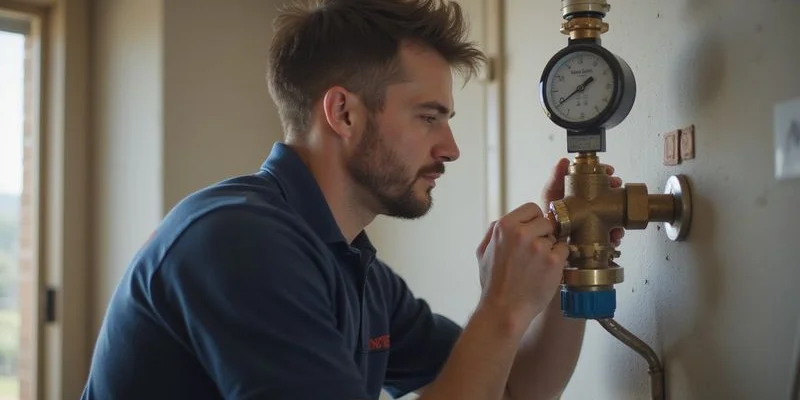
Properties located in low-lying areas of North Johannesburg often feature a pressure reducing valve (PRV) on their main incoming line. This brass component restricts high municipal pressure to protect your internal fixtures from blowing out.
Our local installations typically utilize a standard 400kPa PRV from trusted brands like Cobra or Caleffi.
Recognizing a Failing PRV
If this control valve fails or traps debris, it can strangle your water supply.
You might hear a distinct humming or whistling sound near the valve just before the flow drops completely. A failing PRV usually causes a sudden loss of force rather than a slow, gradual decline.
We advise checking both hot and cold taps, as a broken PRV will affect every single outlet uniformly.
PRV Replacement Costs
A qualified professional must test the valve with a static pressure gauge to confirm a failure.
Our team can swap out a defective unit quickly. Expect to pay between R1,500 and R3,500 for a new valve and the associated labor.
Cause 5: Blocked Aerators or Shower Heads
An isolated pressure drop at a single fixture usually points to a clogged aerator or a blocked shower head.
Our water quality tests confirm that Johannesburg water is actually moderately soft, typically registering between 60 and 110 parts per million. However, the city’s aging infrastructure carries rust flakes and silt directly into your plumbing.
These tiny particles become trapped in the small mesh screens at the end of your taps.
A Simple DIY Cleaning Method
- Unscrew the threaded aerator from the spout or remove your shower head completely.
- Submerge the parts in a bowl of white vinegar.
- Allow the acetic acid to dissolve the calcium carbonate scale for two to four hours.
- Scrub the mesh with an old toothbrush to clear out any stubborn grit.
- Rinse the components thoroughly and screw them back into place.
This quick maintenance task costs nothing and immediately restores a strong flow to your affected basins.
We highly recommend cleaning your aerators twice a year to maintain optimal performance.
Cause 6: Geyser Issues
A weak flow limited strictly to your hot water taps indicates a bottleneck at your geyser.
Our technicians frequently diagnose hot water restrictions in standard 150-litre electric units like those manufactured by Kwikot. Over several years of continuous heating, calcium sediment hardens at the bottom of the cylinder.
This thick sludge layer reduces the tank’s effective capacity and partially blocks the hot water outlet pipe.
Common Geyser Faults
- Faulty Temperature and Pressure (T&P) valve: A broken safety valve that leaks continuously will drop the system pressure.
- Heavy sediment buildup: Sludge accumulation restricts the internal flow dynamics of the heating cylinder.
- Partially closed isolation valve: The small shut-off valve on the cold water inlet might accidentally be left half-closed.
- Undersized heating system: Small geysers struggle to maintain adequate force when multiple family members shower at once.
Restoring Hot Water Flow
Start by visually checking your cold water isolation valve to ensure the handle is completely parallel to the pipe.
Our maintenance crews can drain your tank and physically flush out the hardened sediment. Annual servicing prevents these blockages from forming in the first place. For a complete system upgrade, explore our geyser installation options.
You can read our comprehensive geyser maintenance article for more preventative strategies.
Cause 7: Multiple Fixtures Running Simultaneously
A noticeable drop in force when someone flushes a toilet while you are showering points to inadequate pipe sizing.
Our plumbing designs show that many residential extensions add new bathrooms without upgrading the original supply lines. Older homes often run 15mm branch lines straight from the meter.
These narrow pipes simply cannot carry enough volume to support two open taps at the exact same time.
Upgrading Your Pipe Network
A professional assessment will determine if your current pipe diameters match your family’s daily demand.
We solve this volume issue by installing a larger 22mm main distribution manifold. This wider primary artery provides a greater volume of water to the smaller branch lines.
Your taps will maintain a steady flow even during the busiest morning routines.
Cause 8: Water Pressure After Load Shedding
Rolling blackouts and load shedding schedules create havoc for local municipal pump stations.
Our monitoring systems track severe supply drops immediately after power returns to a suburb. High-elevation water towers rely on electric pumps to maintain a steady head of pressure.
When the grid goes dark, these holding tanks slowly drain down.
The Re-Pressurization Delay
A massive demand surge hits the grid the moment the electricity switches back on.
We see geysers, dishwashers, and washing machines all powering up simultaneously to draw fresh water. This intense local demand prevents the municipal towers from refilling quickly.
You will usually experience a frustrating trickle for one to two hours while the network struggles to re-pressurize.
When to Call a Professional
Some household fixes only require a wrench and some vinegar, but underlying structural faults demand expert attention.
Our PIRB-registered plumbers carry calibrated gauges to measure both your static and dynamic water pressure accurately. These specific tests pinpoint exactly where the flow restriction is occurring within your walls.
Contact a qualified expert immediately if:
Signs You Need an Expert
- Your flow remains uniformly weak even after fully opening the main meter stopcock.
- Your utility bill spikes, suggesting a massive hidden underground leak.
- The force drops suddenly and completely without any municipal outage warnings — this may require emergency plumbing attention.
- Your geyser fails to deliver a steady stream of hot water.
- Cleaning your tap aerators produces zero improvement in the flow rate.
We operate a dedicated network of certified technicians across Sandton, Bryanston, Fourways, and Midrand.
Our teams provide highly responsive pipe repair and replacement services to restore your home’s comfort. Let a trained professional assess your system and implement a permanent, reliable fix.
Related Reading
- Is It Time to Replace Your Galvanised Pipes?
- Copper vs PEX Piping: Which Is Better?
- 7 Warning Signs of a Hidden Water Leak
- Plumbing Emergencies During Load Shedding
Conclusion
Dealing with a weak shower is a daily annoyance that nobody should have to endure. Low Water Pressure? Common Causes and How to Fix Them is a solvable puzzle once you understand the symptoms.
A quick check of your stopcock or aerators might be all it takes to restore your flow.
We encourage you to inspect your home using the steps outlined above. If the problem requires professional tools, reach out to our team to book a comprehensive pressure assessment today.