DIY Leak Checks vs Professional Leak Detection: When to Call a Pro
Some leaks you can find yourself. Others need thermal imaging and acoustic equipment. Here's how to know the difference.
We often notice property owners brushing off a small water drip as a minor annoyance. That tiny drip actually costs South African homeowners millions of rands every year in wasted water, structural damage, and emergency plumbing repairs. Our team knows that not all plumbing failures are created equal when evaluating DIY Leak Checks vs Professional Leak Detection: When to Call a Pro.
Some problems are straightforward enough for a handy homeowner to identify. We highly recommend learning the difference between a simple DIY fix and a situation requiring a professional leak detection specialist. The City of Johannesburg proposed a 13.9% water tariff increase for the 2025/2026 financial year.
Our goal is to help you catch these issues before they inflate your municipal bill. This guide breaks down exactly when to troubleshoot and when to call the experts.
Understanding DIY Leak Checks vs Professional Leak Detection: When to Call a Pro
Before spending money on a professional callout, there are several effective checks you can perform yourself. We always encourage clients to run these basic diagnostic steps first.
These methods do not require any special tools. Our technicians rely on these same basic principles to confirm whether a leak exists and narrow down its general location.
The Water Meter Test
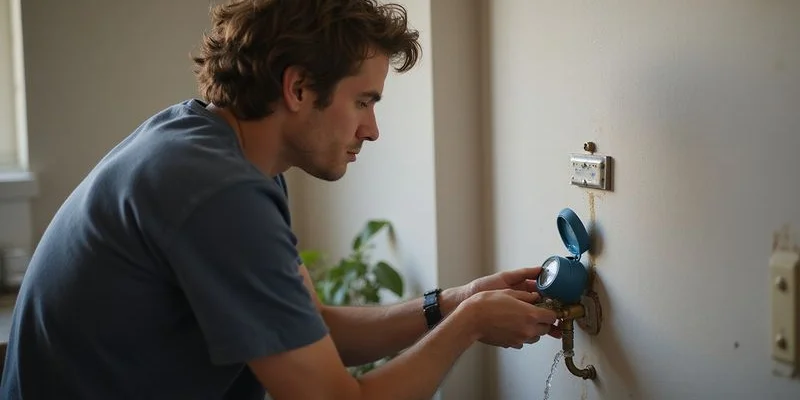
This is the single most useful DIY check available to any homeowner. We consider this the gold standard for confirming a hidden water issue.
Johannesburg Water municipal meters are highly sensitive and will register even the smallest continuous draw. Our standard advice is to run this test overnight for the most accurate results.
- Turn off every tap, appliance, and irrigation system in your home.
- Check that your geyser is not actively heating or drawing water.
- Locate your water meter near the boundary wall or pavement.
- Record the exact numbers on the dials or digital readout.
- Wait at least two hours without using any water.
- Read the meter again to check for any changes.
If the reading has increased, water is flowing somewhere on your property. We suggest taking a clear photo of the meter before and after the test to keep a precise visual record.
This confirms an active flow but does not pinpoint the location.
Visual Inspection of Exposed Pipes
Walk around your property and inspect any pipes you can see. We suggest checking under sinks, behind toilets, in the garage, and along exterior walls.
South African homes frequently use copper or Polycop piping for exposed runs. Our crews often spot the first signs of trouble just by looking closely at these exposed joints.
Look for these specific warning signs:
- Drips or active moisture on pipe joints and connections.
- Green or white mineral deposits on copper fittings.
- Rust stains or flaking on galvanised steel pipes — this often signals the need for pipe repair.
- Water stains on walls or ceilings near plumbing runs.
- Damp patches on floors near bathrooms or kitchens.
The Toilet Dye Test
Toilets are one of the most common sources of hidden water waste. We have seen a single running toilet waste up to 100,000 litres of water in a year based on City of Johannesburg data.
A running cistern can cost you thousands of rands without making an obvious sound. Our favorite trick for catching this is the simple dye test.
- Remove the cistern lid from the toilet.
- Add a few drops of dark food colouring to the cistern water.
- Wait 15 to 20 minutes without flushing the toilet.
- Check the toilet bowl for any coloured water.
If the coloured water appears in the bowl, the flapper valve is failing. We regularly tell clients that this is a simple and inexpensive fix.
Replacement flapper valves are available from local stores like Builders Warehouse or Leroy Merlin for under R100.
Checking Your Geyser Overflow
Your geyser has a pressure relief valve connected to an overflow pipe. We cover this extensively in our geyser burst prevention guide.
South African SANS 10254 regulations require this pipe to exit through the roof or an exterior wall. Our teams know that a small amount of dripping during heating is perfectly normal.
Continuous dripping indicates a faulty Temperature and Pressure Relief valve or excessive system pressure. We advise checking the end of the 22mm overflow pipe outside your house. A wet or dripping pipe when the geyser has not been heating recently means you need professional maintenance.
The Limitations of DIY Leak Detection
While the checks above provide valuable clues, they have significant technical limitations. We know that a meter test only confirms that a water loss is happening.
It cannot tell you whether the failure is in the main supply line, the internal plumbing, or the irrigation system. Our experience shows that most residential plumbing is completely hidden behind walls, under floors, or buried deeply underground.
Here are the situations where basic methods simply cannot get the job done.
Underground Leaks
The main pipe running from your municipal water meter to your home sits buried underground. We usually find these pipes buried between 600mm and 1 metre deep.
Johannesburg’s Highveld region is notorious for expansive clay soils that shift dramatically based on moisture levels. Our technicians often see underground leaks saturate this clay, causing severe foundation heaving over time without any visible surface water.
Slab Leaks
Many homes in suburbs like Bryanston, Lonehill, and Douglasdale feature concrete slab foundations. We frequently find hot and cold water lines running directly under or through these concrete floors.
Water from a degraded copper pipe has nowhere to go but into the surrounding building materials. Our clients usually only notice damp patches or unusually warm tiles weeks after the pipe has failed.
Leaks Behind Walls
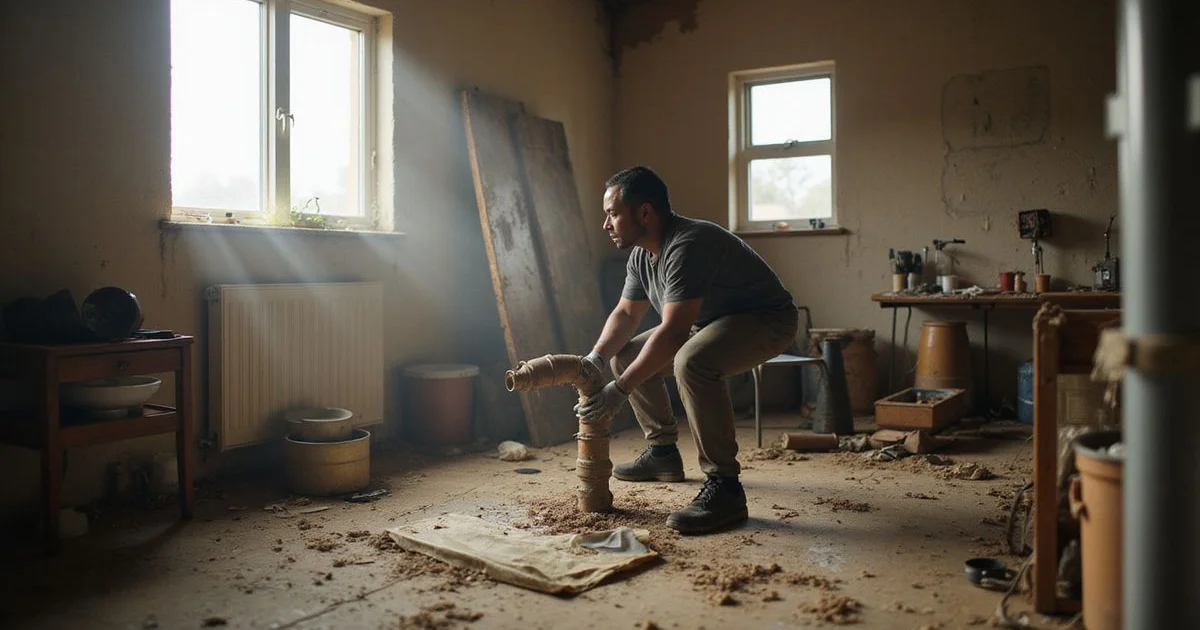
Pipes concealed within standard South African double-brick walls can leak for extended periods. We often track water traveling along mortar lines and timber framing inside the wall cavity.
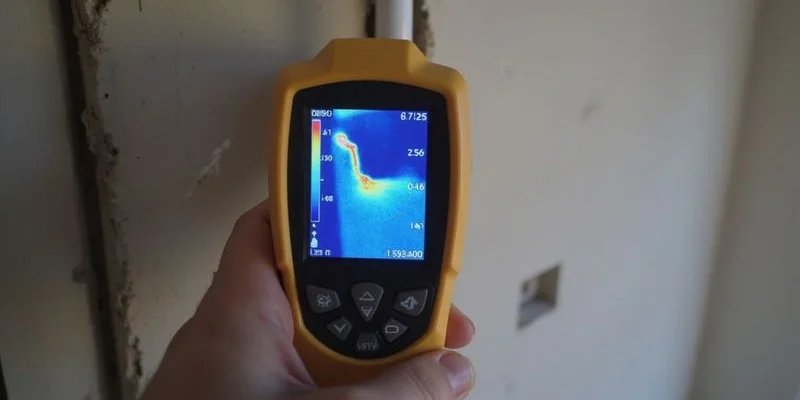
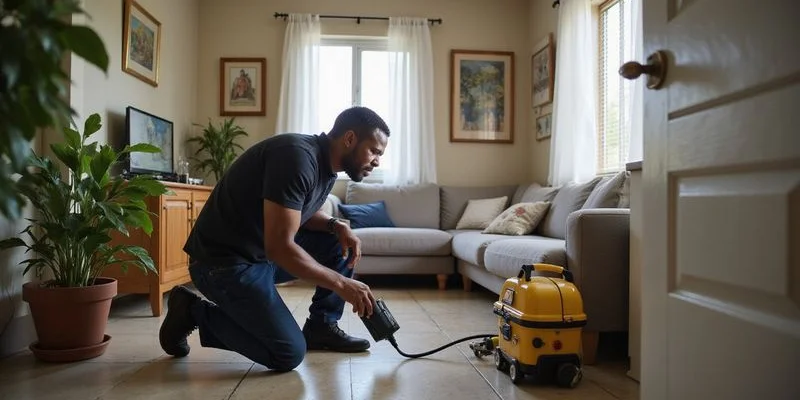
The moisture frequently emerges as a damp spot several metres away from the actual source. Our specialists use the advanced equipment pictured below to trace the water back to its true origin.
When to Call a Professional Leak Detection Specialist
The general rule for property owners is quite straightforward. We recommend calling for help if you have confirmed an issue exists but cannot see where the water is escaping.
Specifically, you need professional assistance when you experience the following scenarios.
- Your meter test is positive but you cannot find any visible dripping water.
- You discover damp patches on walls or floors with no obvious source nearby.
- You feel distinct warm spots on your floor tiles.
- Your municipal water bill has increased significantly without any change in your household usage.
- You can hear a hissing sound when all taps and appliances are securely shut off.
- You notice new foundation cracks caused by underground soil erosion.
What Professional Leak Detection Involves
A qualified specialist uses advanced technology to locate problems without destructive investigation. We utilize these tools to avoid breaking open walls or digging up floors unnecessarily.
This approach saves you money and keeps your home intact during the diagnostic process.
| Detection Technology | How The Equipment Works | Best Application |
|---|---|---|
| Acoustic Detection | Uses sensitive microphones and ground sensors to hear escaping water. | Locating pressurised underground supply line failures. |
| Thermal Imaging | Detects invisible temperature variations on surfaces using infrared cameras. | Finding hidden hot water pipe failures behind walls or under slabs. |
| Tracer Gas | Involves pumping a safe nitrogen-hydrogen gas mixture into the pipes. | Pinpointing tiny holes in complex systems or noisy environments. |
| Pressure Testing | Isolates specific plumbing sections to monitor pressure drops accurately. | Determining exactly which pipe zone contains the failure. |
The Cost Comparison
Many property owners hesitate to call a specialist because they worry about the initial callout fee. We understand this concern, but the math strongly favours early professional intervention.
A professional service in North Johannesburg for 2026 typically costs between R1,200 and R3,500 depending on the property size and technology required. Our data proves this is a fraction of what you will spend if the water continues to flow undetected.
Consider the financial alternatives and secondary damage costs.
- Wasted water quickly pushes you into higher municipal tariff brackets.
- A moderate leak wasting 30,000 litres a month will add over R1,500 to your Johannesburg Water bill.
- Water damage to brickwork, ceilings, and foundations routinely costs upwards of R50,000 to repair.
- Professional mould remediation for a flooded room can cost between R10,000 and R30,000.
- Guesswork repairs involving random digging waste money and cause unnecessary property damage.
Professional detection pinpoints the exact location on the first try. We use this precision to perform targeted repairs that minimise your total cost and disruption.
The Smart Approach: DIY First, Then Professional
The most cost-effective management strategy combines both DIY and professional methods. We advise all our clients to follow a structured approach to property maintenance.
- Start by performing the meter test, visual inspection, toilet dye test, and geyser overflow check.
- Document exactly which taps have low pressure and where damp patches are located.
- Share your findings with the specialist to help them focus their investigation immediately.
This approach ensures you never pay a professional callout fee for a simple running toilet that you could fix yourself. We want to ensure that hidden structural threats are found and repaired before they cause serious damage.
Understanding DIY Leak Checks vs Professional Leak Detection: When to Call a Pro ensures your property remains safe and efficient. Our network of PIRB-registered plumbers offers professional leak detection services across all North Johannesburg suburbs.
Property owners in Sandton, Bryanston, Fourways, Randburg, and Midrand rely on these qualified specialists every single day. We ensure our trusted partners use the latest acoustic and thermal imaging technology to secure your property.